 |
| West Railroad Street, Green River, Wyoming |
Tuesday, January 21, 2020


Tuesday, January 7, 2020
№ 435. God of the Gaps
Someone asked the Master if he believed in luck.
"Certainly," he replied with a twinkle in his eye.
"How else can one explain the success of people one does not like?"
--- from Awakening, Conversations with the Master, by Anthony de Mello

"Certainly," he replied with a twinkle in his eye.
"How else can one explain the success of people one does not like?"
--- from Awakening, Conversations with the Master, by Anthony de Mello

Friday, January 3, 2020
№ 434. 21st Century World Order
The first wave of globalization, although it wasn’t called as such, happened in the late 19th and early 20th century. At that time, technological advances in transportation via steamships and railways made it so much easier to move people and commodities across the continents, leading to a surge in cross-border trade.
The share of world trade in global GDP rose from 6 percent in 1800 to 14 percent in 1914. Foreign direct investments accounted for a full half of total investments in Britain in the early 1900s, whereas the same ratio was only 6 percent for the United States, Germany and Japan in the early 2000s.

By this measure, these economies were much less globalized than Britain was a century before. Two world wars ended that first wave, and led to economic stagnation.
Monday, December 23, 2019
№ 433. Experience, Observation and Imagination
"A writer needs three things, experience, observation, and imagination — any two of which, at times any one of which — can supply the lack of the others."

--- William Faulkner
And everyone thinks he/she/they is/are a writer today. Imagination.

№ 432. Thirteen Life Learnings in 2019

Cultivate that capacity for “negative capability.” We live in a culture where one of the greatest social disgraces is not having an opinion, so we often form our “opinions” based on superficial impressions or the borrowed ideas of others, without investing the time and thought that cultivating true conviction necessitates. We then go around asserting these donned opinions and clinging to them as anchors to our own reality. It’s enormously disorienting to simply say, “I don’t know.” But it’s infinitely more rewarding to understand than to be right — even if that means changing your mind about a topic, an ideology, or, above all, yourself.

Sunday, December 8, 2019
№ 431. Black Mirror Reality

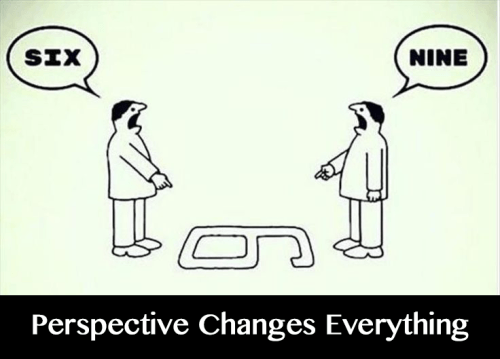
Globalization and the internet may have made the world smaller, but now we're experiencing a counterattack, the regionalization of truth.
Wednesday, December 4, 2019
№ 430. Reading the Signs of the Times
 |
| Technology |
Monday, December 2, 2019

Subscribe to:
Comments (Atom)