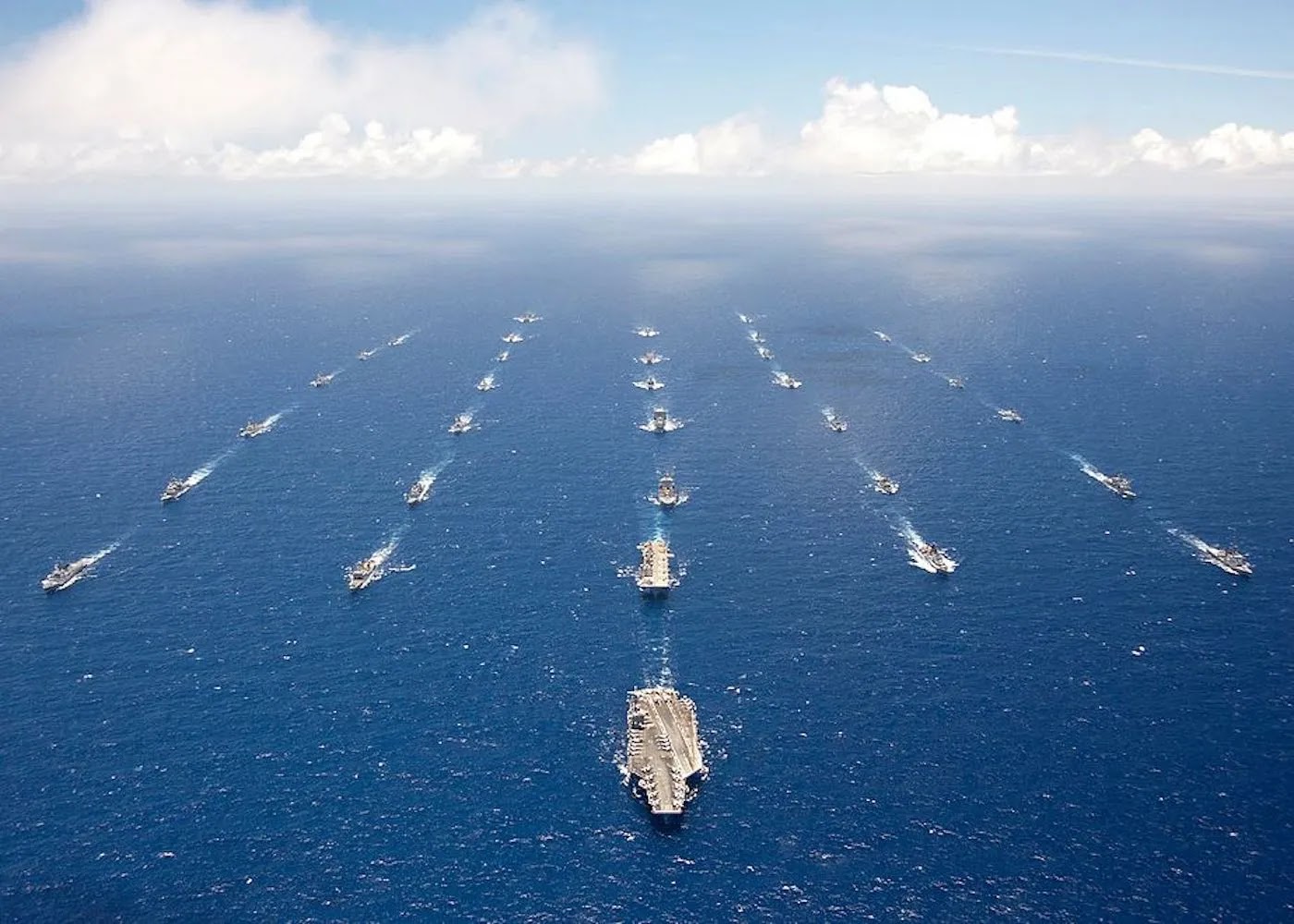
“We were terrified,” the 65-year-old Hubalde recalled. “We thought China might attack when they learned there were military exercises in Batanes.” Hubalde’s helper, who was in the fields when the troops arrived, panicked and hid in the woods until nightfall. “She thought the war had already started,” said Hubalde, who owns a variety store in the provincial capital, Basco.
Since then, Batanes’ 20,000 residents have become accustomed to high-tempo war games in these islands of tightly packed towns and villages wedged between rugged slopes and stony beaches. Among them: a series of joint exercises from April to June this year in which U.S. forces twice airlifted anti-ship missile launchers here.
Until recently, locals say, this smallest and least populous province of
the Philippines was a peaceful backwater. But geography dictates that
it is now on the frontline of the great power competition between the
United States and China for dominance in the Asia-Pacific region. The
islands sit on the southern edge of the Bashi Channel, a major shipping
lane between the Philippines and Taiwan that connects the South China
Sea with the Western Pacific.
This
year’s exercises revealed how the U.S. and its Philippine ally intend
to use ground-based anti-ship missiles as part of efforts to deny the
Chinese navy access to the Western Pacific by making this waterway
impassable in a conflict, Reuters reporting shows. These missiles could
also be used to attack a Chinese fleet attempting to invade Taiwan or
mount a blockade against the democratically governed island.
The
ability to conduct operations deep into the Pacific would be vital for
the Chinese navy if it wanted to counter U.S. and Japanese attempts to
intervene in a Taiwan crisis. Chinese naval and air forces would also
need to operate in the Western Pacific to stymie any counter-measures by
the U.S. and its allies if Beijing imposed a blockade on Taiwan.
“We
should have the ability to deny the Chinese control of the Bashi
Channel,” retired Rear Admiral Rommel Ong, a former vice-commander of
the Philippine Navy, told Reuters in an interview. “In a conflict
scenario, that decisive point will determine who wins or who loses.”
Retired
General Emmanuel Bautista, a former chief of staff of the Armed Forces
of the Philippines, put it even more plainly: “The invasion of Taiwan is
almost impossible if you don’t control the northern Philippines.”
China
views Taiwan as its own territory, and President Xi Jinping has said
that Beijing refuses to renounce the right to use force to gain control
of the island. Taiwan's government rejects China's sovereignty claims,
saying only the island's people can decide their future.
“The
Taiwan issue is China's internal affair,” the foreign ministry in
Beijing said in response to questions. “How to resolve it is solely
China's own business and does not warrant interference from others.” The
ministry also said it advised the Philippines “against using any
pretext to draw in external forces” and not to provoke confrontation and
create "tensions in the South China Sea.”
The Pentagon did not respond to questions. Taiwan’s defense ministry declined to comment for this story.
A fluorescent green cake has become a daily staple in Singapore. Locals grab a slice of the ring-shaped pandan chiffon cake on their way to work or pick up an entire one for friends’ birthday celebrations.
The light, fluffy cake gets its color and subtle grassy vanilla taste from the tropical pandan plant, which is believed to have originated in Indonesia’s Moluccas Islands, and has been used in cooking for hundreds of years.
In Singapore, pandan chiffon cakes started appearing in the 1970s, says local food historian Khir Johari. Today, the dessert is ubiquitous in the city, appearing everywhere from mom-and-pop bakeries to upscale restaurants.
One particular family-owned bakery helped take the cakes citywide, Johari adds.
“I made it popular in Singapore,” says Anastasia Liew, who in 1979 founded the first Bengawan Solo cake shop, a small neighborhood store. “Sorry, we’re not very modest,” chimes in her son Henry, a company director, with a chuckle.
Anastasia initially sold cakes she baked at home but had to open a shop to meet the licensing requirements to sell to department stores. Today, Bengawan Solo has more than 40 shops across the city of six million people.
Henry says the bakery’s popularity comes down to word of mouth, with a little help from celebrity fans. For example, eight years ago Singaporean Mandopop star JJ Lin gifted a Bengawan Solo cake to fellow judges on a Chinese singing show. In 2022, Taiwanese music superstar Jay Chou posted on Instagram about being gifted the cakes when he performed in Singapore.
The company sells other products like kueh lapis, a layer cake, ondeh ondeh, glutinous rice balls filled with palm sugar, and pineapple tarts, pastries filled with fruity jam. But pandan chiffon cake is its best-known product.
Last year, the bakery sold about 85,000 whole pandan chiffon cakes, which cost 22 Singapore dollars ($17) – achieving sales revenue of about 76 million Singapore dollars ($57 million) across its products, up 11% from 2023. But its biggest opportunities may lie overseas.
“I don’t think we can grow very much more in Singapore,” says Henry. He adds that the company plans to focus on selling its products as food gifts across Asia, and hopefully further afield, by working on things like unique packaging. “In the Asian region, there’s a very strong gift giving culture,” he says.
Going global
It’s impossible to leave Singapore’s Changi airport without passing a Bengawan Solo. There are five stores at Changi, the world’s fourth-busiest international airport in 2024, including one in each departure terminal.
The cakes have become wildly popular in places like Hong Kong, where the friends, family, and colleagues of travelers from Singapore often expect a cake. Demand has even sparked a secondary market on Facebook Marketplace and the app Carousell.
Henry says that airport stores now account for more than half of Bengawan’s total sales, and its products seem to be the most popular with travelers from Hong Kong, mainland China, Taiwan, South Korea, and Japan.
The company has considered expanding overseas, he says, but it has come up against barriers like high rental costs in Hong Kong. The family also wants to ensure its quality is maintained. Today, it uses mostly local sources for its ingredients and gets the 300 to 400 kilograms of pandan leaves from just across the border in Malaysia.
With or without Bengawan Solo, the global appetite for pandan appears to be growing. In Hong Kong, Pandan Man is selling the cakes in two upscale shopping malls. Pandan cakes, and pandan-infused dishes, from mochi egg tarts to cronuts, have started popping up across cities like New York, San Francisco and Los Angeles.
Keri Matwick, a senior lecturer at Nanyang Technological University in Singapore, who researches food and language, says that there’s been a rise of interest in Asian baking in the US, including desserts flavored by ingredients like matcha, coconut and ube — a purple yam from the Philippines.
Matcha, a Japanese green tea that has been incorporated into everything from tiramisu to cupcakes to banana pudding, has become so popular that some tea sellers in Japan are warning of an impending shortage.
Now, it might be pandan’s turn to go global. “Matcha has already set that precedent of something green is okay,” says Matwick. “I think (pandan is) starting to emerge as more of a star than it ever has before.”
Located in the
lush forests of Ubud in Bali is the Green School, an international
school and community known around the world for its holistic approach to
education. The academy is strongly focused on sustainability –
naturally it is built to be eco-friendly too. Its unique buildings are
made predominantly from bamboo, mud and grass, and the campus runs
entirely on renewable energy; even food waste is converted into compost.
“We believe that education needs to change. It
needs to adapt to the future,” said Sal Gordon, head of teaching and
learning at Green School Bali, who has been at the school for nearly a
decade. “Our students learn to make the world sustainable, and we
believe the purpose of education should be to make the world a better
place.”
"To provoke China into a military confrontation today is to trap it
into an arena where the US is still superior. The American chess pieces
of 800 overseas military bases, gunboat diplomacy in air, land, and sea,
and military technology are more than 20 years ahead of China, and are
further bolstered by the $850 billion proposed US defense budget for
2023. The US continues to surround China in the Indo-Pacific with bases,
carrier fleets, and submarines bristling with conventional and nuclear
missiles.
Fortunately, China does not want to fall into the trap that doomed
the former Soviet Union in an arms race or commit the mistakes of past
colonial big powers.
But this fierce geopolitical competition between the US and China
inevitably involves the Philippines because of its geostrategic
location. Will we continue to be a de facto US aircraft carrier and part
of the US nuclear infrastructure? The Mutual Defense Treaty, the
Visiting Forces Agreement, and the Enhanced Defense Cooperation
Agreement make us part of the offensive island chain of encirclement
against neighboring China. There is now an agreement with the US-firm
Cerberus for it to take over Hanjin Shipyard at Subic that will allow
the regular repair, refueling, and docking of the US Navy."
China’s military might has, for the first time, made a conquest of
Taiwan conceivable, perhaps even tempting. The United States wants to
thwart any invasion but has watched its military dominance in Asia
steadily erode. Taiwan’s own military preparedness has withered, even as its people become increasingly resistant to unification.
All three have sought to show resolve in hopes of averting war, only to
provoke countermoves that compound distrust and increase the risk of
miscalculation.