 |
| Demographics: The Countries Losing Population Fastest |
Showing posts with label green advocacy. Show all posts
Showing posts with label green advocacy. Show all posts
Sunday, June 29, 2025


Thursday, June 20, 2024
№ 728. Renewable Energy
 |
| Our World in Data |
A cleaner, more sustainable form of energy, renewables draw power from natural sources such as the sun (solar), wind (aeolian), ocean (marine), rivers (hydroelectric), and the Earth’s internal heat (geothermal). However, this also means they can be affected by environmental, seasonal and daily cycles that can limit their use or efficiency. As such, renewable energy cannot always consistently produce energy at all hours of the day – this is called intermittency.
Solar and wind farms energy production in Europe have been known to fluctuate between 0 to 23 and 24GW of energy respectively during peak times. While these peak production periods provide a large share of energy, the sometimes unpredictable lulls are what define the intermittency of renewables. This intermittency is contrasted by the constant power output that can be generated by fossil fuel-based power plants using coal or natural gas, this has often been referred to as base-load energy. These power plants are able to provide a constant source of energy but do so at the cost of the environment.
Intermittency has always been an issue limiting the growth of renewable energy, but the development of high-capacity batteries capable of storing large quantities of power has changed that. Being able to store excess energy produced by renewable energy during peak cycles, storage provides power grids with the ability to tap into those reserves when the cycles dip – negating the intermittency of renewables. Recent studies have shown that the use of large-scale batteries in the United States could both help reduce renewable energy infrastructure costs and provide over 80% of the nation’s power demands through sustainable energy.
Monday, March 20, 2023

Monday, November 28, 2022
№ 661. The Man Who Planted Trees
 |
| Stuck in a Book |
“For a human character to reveal truly exceptional qualities, one must have the good fortune to be able to observe its performance over many years. If this performance is devoid of all egoism, if its guiding motive is unparalleled generosity, if it is absolutely certain that there is no thought of recompense and that, in addition, it has left its visible mark upon the earth, then there can be no mistake.”

Thursday, October 27, 2022
№ 655. Climate Status

You can never really see the future, only imagine it, then try to make sense of the new world when it arrives.
Just a few years ago, climate projections for this century looked quite apocalyptic, with most scientists warning that continuing “business as usual” would bring the world four or even five degrees Celsius of warming — a change disruptive enough to call forth not only predictions of food crises and heat stress, state conflict and economic strife, but, from some corners, warnings of civilizational collapse and even a sort of human endgame. (Perhaps you’ve had nightmares about each of these and seen premonitions of them in your newsfeed.)
Now, with the world already 1.2 degrees hotter, scientists believe that warming this century will most likely fall between two or three degrees. (A United Nations report released this week ahead of the COP27 climate conference in Sharm el Sheikh, Egypt, confirmed that range.) A little lower is possible, with much more concerted action; a little higher, too, with slower action and bad climate luck. Those numbers may sound abstract, but what they suggest is this: Thanks to astonishing declines in the price of renewables, a truly global political mobilization, a clearer picture of the energy future and serious policy focus from world leaders, we have cut expected warming almost in half in just five years.
Friday, January 7, 2022

Tuesday, December 21, 2021
№ 599. Creation
We are only stewards, never masters, of creation.
 |
| Thinking |
"In 'A Natural History of the Future,' the ecologist Rob Dunn sketches an arresting vision of this relentless natural world — a world that is in equal measures creative, unguided and extravagant. Fog a tree with pesticides and watch new beetle species tumble from the canopy by the hundreds, a “riot of unnamed life.” Chlorinate your water and, though you might wipe out most parasites, you’ll soon bedew your shower head with chlorine-resistant mycobacteria. Make a world fit for bedbugs, then try to kill them with chemicals, and you’ll end up — not in a world without bedbugs, but one in which they’ve “evolved resistance to half a dozen different pesticides.”
Life is not a passive force on the planet, and much as we might presume to sit in judgment of Creation — even sorting species by their economic value to us — we live on nature’s terms. The sooner we recognize this, Dunn argues, the better."
Monday, November 2, 2020
№ 519. TEOTWAWKI
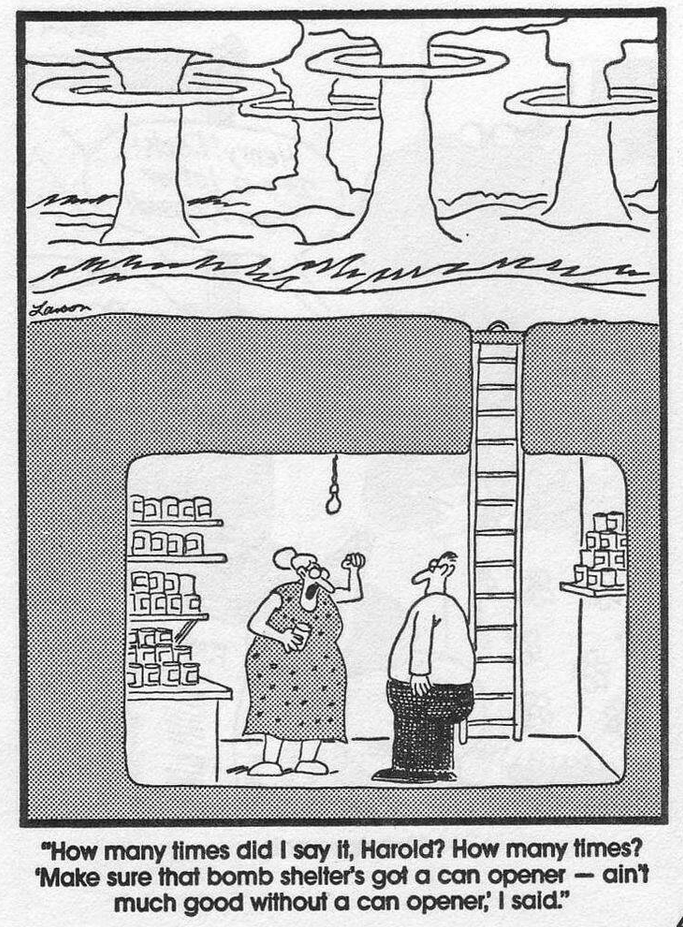
The Pandemic has arrived. We are still managing it. Barely.
Winter is coming.
Not the white walkers, but worse, the irreversible rise in temperature. An accelerating system that could wipe out our civilizations.
Singapore, as always, is leading into that foreseeable future.
"Giant solar-powered air-conditioners, vacuum garbage collection, subterranean roads for electric vehicles, urban farms and green architecture. Put them all together and you have Tengah, Singapore’s most ambitious project yet to build the city of the future.
TEOTWAWKI = The end of the world as we know it.

Thursday, July 2, 2020
№ 484. Working from Home: Green Spaces

Decades of research have shown that spending time in green space is good for our physical and mental health – including boosting our emotional states and attention spans and improving our longevity. Even a little goes a long way: a study in the 1980s showed that post-surgery patients assigned to hospital rooms with greenery outside recovered faster than those who didn’t have such accommodations.
Sunday, December 1, 2019
№ 428. Tipping Points
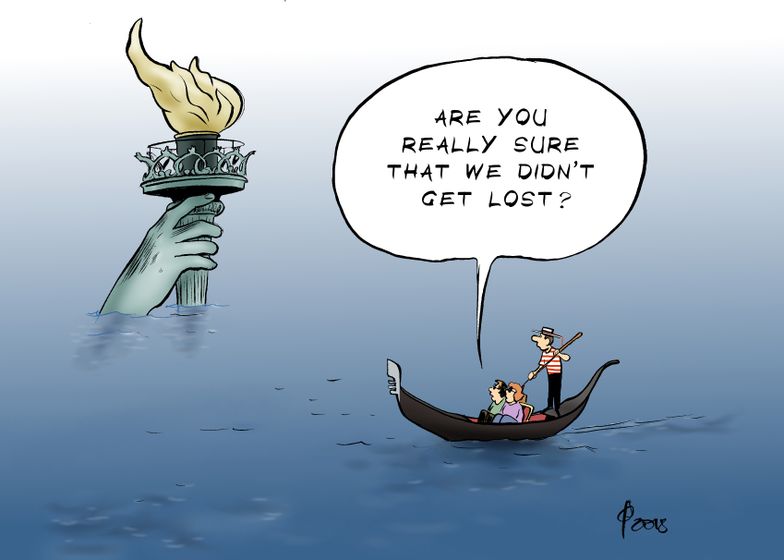
When is an emergency really an emergency?
If you’re the captain of the Titanic, approaching a giant iceberg with the potential to sink your ship becomes an emergency only when you realise you might not have enough time to steer a safe course.
And so it is, says Prof Hans Joachim Schellnhuber, when it comes to the climate emergency.
Knowing how long societies have to react to pull the brake on the Earth’s climate and then how long it will take for the ship to slow down is the difference between a climate emergency and a manageable problem.
If you’re the captain of the Titanic, approaching a giant iceberg with the potential to sink your ship becomes an emergency only when you realise you might not have enough time to steer a safe course.
And so it is, says Prof Hans Joachim Schellnhuber, when it comes to the climate emergency.
Knowing how long societies have to react to pull the brake on the Earth’s climate and then how long it will take for the ship to slow down is the difference between a climate emergency and a manageable problem.
Sunday, November 3, 2019
№ 420. Climate Change
Climate change is not a belief system.
We know that the earth’s climate is changing thanks to observations, facts and data that we can see with our eyes and test with the sound minds that God has given us.
And still more fundamentally, here's why it matters: because real people are being affected today; and as Christians we believe that God’s love has been poured in our hearts to share with our brothers and sisters here and around the world who are suffering.
Caring about this planet and every living thing on it is not somehow antithetical to who we are as Christians, but rather central to it.
Being concerned about climate change is a genuine expression of our faith, bringing our attitudes and actions more closely into line with who we already are and what we most want to be.
And not only that; if we truly believe we’ve been given responsibility for every living thing on this planet (including each other) as it says in Genesis 1, then it isn’t only a matter of caring: we should be at the front of the line demanding action.
We know that the earth’s climate is changing thanks to observations, facts and data that we can see with our eyes and test with the sound minds that God has given us.
And still more fundamentally, here's why it matters: because real people are being affected today; and as Christians we believe that God’s love has been poured in our hearts to share with our brothers and sisters here and around the world who are suffering.
Caring about this planet and every living thing on it is not somehow antithetical to who we are as Christians, but rather central to it.
Being concerned about climate change is a genuine expression of our faith, bringing our attitudes and actions more closely into line with who we already are and what we most want to be.
And not only that; if we truly believe we’ve been given responsibility for every living thing on this planet (including each other) as it says in Genesis 1, then it isn’t only a matter of caring: we should be at the front of the line demanding action.
Thursday, July 25, 2019
№ 401. Dear Santa

Dear Santa: Can you please turn these keychains into portkeys. That would help save the planet from global warming. Kthanksbye.
Sunday, August 28, 2016
Tuesday, March 8, 2016
№ 257. Plastic Grenade
Plastic is a material consisting of any of a wide range ofsynthetic or semi-synthetic organics that are malleable and can be molded into solid objects of diverse shapes. Plastics are typically organic polymers of high molecular mass, but they often contain other substances. They are usually synthetic, most commonly derived from petrochemicals, but many are partially natural.
 |
| Lifecycle of Plastic Water Bottle |
Wednesday, September 30, 2015
№ 218. "There may be flowing water on Mars. But is there intelligent life on Earth?"
"New findings from NASA's Mars Reconnaissance Orbiter (MRO) provide the strongest evidence yet that liquid water flows intermittently on present-day Mars."
 |
Meanwhile, on Earth.... We are still debating, doing very little that is aggressive and significant enough to reverse climate change and continuing blithely with our irresponsibility---daily. I am already old enough so I have only a few more decades left. But I do fear for the next generations. What will they inherit from our shortsighted and selfish mess of a world?
Sunday, December 9, 2012
№ 104. Sky Fall of Bataan
Dear M,
Mission accomplished! Briefing and pictures below.

7:30 am Saturday. Cubao is really a backpacker's beginning and end point. Most trips start here and mercifully wind down at the same civilization by the EDSA artery, after a long trip.
8:00 am. We boarded the Five Star bus to Bataan. Forty kids via Route 63 promised of green road trip.
5:30 pm. Notwithstanding the bus downgrade, uhmm, transfer in Pampanga, flat tire, uphill malfunction at Mt. Samat, muggy hike to the Cross monument, sardine-can dorms turned quarter-star upgrade, the pawikan (sea turtle) groupies finally settled in at the Pawikan Conservation Center in Morong, Bataan.


7:30 pm. Dinner was served, after the orientation by Mang Manolo and the happy birthday ditties. Hormones, adobo lunch and international goodwill form a noisy cocktail, said an old crank.
For the most part the group was subdued. All that multi-lingual camaraderie can be a drain, Frank. Besides, no one could source a bucket of subzero beer for the thirsty teens.
We were ready to accept our tepid fates. But thanks to Mang Manolo and his ATVs, we had a round of iced Red Horse to fortify our resolve for the late night patrol.
11:00 pm. Volunteers of the center walk night patrols to scout for nesting female sea turtles by the beach. November is the best time. An important part of the conservation effort is their intervention to prevent poachers from harvesting the hundred or so eggs laid in each nest. Volunteers observe the sea turtles as they dig the nest. After that, the turtles are identified, measured, tagged and then allowed to swim back to the sea.
The next process in the intervention is egg management. Volunteers collect the eggs after they are laid, then relocate and transplant them in a safer area --- usually within the enclosed hatchery of the center.
2:30 am Sunday. A long walk in the sand under the moon, is exactly like that, a long walk. Two kilometers.
Moonlight and good weather brought in a lone, but injured, sea turtle to the black shores of sleepy Nagbalayong, Morong. A swim across nautical miles to the beach, no less than four attempts at nest building, big crack on the shell and an injury at the left hindflipper could not stop the call of nature. Before our hushed, sleepy senses, we saw how life struggles against nature and man-made barriers, in real time. A pin drop, or in this case, the calm sea could be heard as we saw the quiet birth of a hundred eggs!
3:00 am. We were barely awake when we reached the center. But before we retired, we saw a volunteer very carefully transplant the eggs in the hatchery. It's the last step before the long wait of incubation. Fifty days or so.

5:00 am. The alarm went off. Nobody heard. Ergo, it did not exist.
6:00 am. No eggs hatched. Snore. Nobody knew.
8:00 am. If the clock couldn't do it, the smell of food could. Everyone rose and shone to the scent of boiled rice, fresh tomatoes, salted eggs, longganizas (sweet and spiced sausages) and fresh watermelons.
9:00 am - 12:00 nn. The cool, sunny, black beach invited. Everyone obliged---even that guy clad in pink malong. Resistance was futile.
1:30 pm. Bus was stuck in the sand. Oh well, more siesta.
Somewhere off the coast of Bataan.... in Scarborough Shoal, Orcs and Gremlins from the Middle Kingdom were downloading invaluable intelligence from the injured pawikan.....
Senior Orc 1: Sir, there's a UN gathering in Bataan, a province northwest of Manila.
Senior Gremlin 1: Hmmm, an international caucus on regional balance of power?
Senior Orc 1: Sir, UNCLOS and strategic architecture.
Senior Gremlin 1: Do we have representation?
Senior Orc 1: Formosa, our renegade province.
Senior Gremlin 1: Send encrypted dispatch. Carrot and stick diplomacy must be revisited.
4:30 pm. The tow truck, they call it wrecker, arrived. Finally.
We all lined up for the bus, ready for the tired ride to the city.
Behind us glowed a cyanide sunset.... a mute witness to a rigged pawikan clone detonating a neutron bomb.... somewhere in Scarborough Shoal.
Signing off.
James
Bento Box:
1. No sea turtles were harmed during the trip.
2. No sea turtles and humans were harmed during the conception of the story. Purely literary license and nonsense. Seriously.
3. Some resources:
Pawikan Conservation Center, Morong, Bataan
Route +63
News Info Inquirer
Mission accomplished! Briefing and pictures below.

7:30 am Saturday. Cubao is really a backpacker's beginning and end point. Most trips start here and mercifully wind down at the same civilization by the EDSA artery, after a long trip.
8:00 am. We boarded the Five Star bus to Bataan. Forty kids via Route 63 promised of green road trip.
5:30 pm. Notwithstanding the bus downgrade, uhmm, transfer in Pampanga, flat tire, uphill malfunction at Mt. Samat, muggy hike to the Cross monument, sardine-can dorms turned quarter-star upgrade, the pawikan (sea turtle) groupies finally settled in at the Pawikan Conservation Center in Morong, Bataan.


7:30 pm. Dinner was served, after the orientation by Mang Manolo and the happy birthday ditties. Hormones, adobo lunch and international goodwill form a noisy cocktail, said an old crank.
For the most part the group was subdued. All that multi-lingual camaraderie can be a drain, Frank. Besides, no one could source a bucket of subzero beer for the thirsty teens.
We were ready to accept our tepid fates. But thanks to Mang Manolo and his ATVs, we had a round of iced Red Horse to fortify our resolve for the late night patrol.
11:00 pm. Volunteers of the center walk night patrols to scout for nesting female sea turtles by the beach. November is the best time. An important part of the conservation effort is their intervention to prevent poachers from harvesting the hundred or so eggs laid in each nest. Volunteers observe the sea turtles as they dig the nest. After that, the turtles are identified, measured, tagged and then allowed to swim back to the sea.
The next process in the intervention is egg management. Volunteers collect the eggs after they are laid, then relocate and transplant them in a safer area --- usually within the enclosed hatchery of the center.
2:30 am Sunday. A long walk in the sand under the moon, is exactly like that, a long walk. Two kilometers.
Moonlight and good weather brought in a lone, but injured, sea turtle to the black shores of sleepy Nagbalayong, Morong. A swim across nautical miles to the beach, no less than four attempts at nest building, big crack on the shell and an injury at the left hindflipper could not stop the call of nature. Before our hushed, sleepy senses, we saw how life struggles against nature and man-made barriers, in real time. A pin drop, or in this case, the calm sea could be heard as we saw the quiet birth of a hundred eggs!
3:00 am. We were barely awake when we reached the center. But before we retired, we saw a volunteer very carefully transplant the eggs in the hatchery. It's the last step before the long wait of incubation. Fifty days or so.

5:00 am. The alarm went off. Nobody heard. Ergo, it did not exist.
6:00 am. No eggs hatched. Snore. Nobody knew.
8:00 am. If the clock couldn't do it, the smell of food could. Everyone rose and shone to the scent of boiled rice, fresh tomatoes, salted eggs, longganizas (sweet and spiced sausages) and fresh watermelons.
9:00 am - 12:00 nn. The cool, sunny, black beach invited. Everyone obliged---even that guy clad in pink malong. Resistance was futile.
1:30 pm. Bus was stuck in the sand. Oh well, more siesta.
Somewhere off the coast of Bataan.... in Scarborough Shoal, Orcs and Gremlins from the Middle Kingdom were downloading invaluable intelligence from the injured pawikan.....
Senior Orc 1: Sir, there's a UN gathering in Bataan, a province northwest of Manila.
Senior Gremlin 1: Hmmm, an international caucus on regional balance of power?
Senior Orc 1: Sir, UNCLOS and strategic architecture.
Senior Gremlin 1: Do we have representation?
Senior Orc 1: Formosa, our renegade province.
Senior Gremlin 1: Send encrypted dispatch. Carrot and stick diplomacy must be revisited.
4:30 pm. The tow truck, they call it wrecker, arrived. Finally.
We all lined up for the bus, ready for the tired ride to the city.
Behind us glowed a cyanide sunset.... a mute witness to a rigged pawikan clone detonating a neutron bomb.... somewhere in Scarborough Shoal.
Signing off.
James
Bento Box:
1. No sea turtles were harmed during the trip.
2. No sea turtles and humans were harmed during the conception of the story. Purely literary license and nonsense. Seriously.
3. Some resources:
Pawikan Conservation Center, Morong, Bataan
Route +63
News Info Inquirer
Thursday, November 29, 2012
№ 103. Analog Vacations
Staycation is dead. The tea pack says it all in the marketing-savvy write-up:
"No Signal / Herbal
Cell phones, crackberries, laptops --- we thought digital technology was going to free us but instead we find ourselves shackled by wireless handcuffs.
Here's a thought: Turn off the cell phone. Shut down the computer, Get off the grid, Our soothing blend of rooibos, lemongrass and orange peel will help you disconnect from the world and reconnect with yourself. This tea is 100% analog."--- LA Mill Coffee
 |
| Ivan About Town |
Friday, September 14, 2012


Wednesday, August 15, 2012
Monday, August 13, 2012
№ 84. Habits of the Mind
It's the climate change on a planetary scale, for starters. Then there are the rabid monsoons. Did we mention the floods thick with our sewage and rich with our possessions? How about the waste segregation floating on our dead rivers?
It's all the irresponsibility and ineptness in this vast urban sinkhole.
And talk about another habit of the mind---anxiety. Anxiety because of and amidst all of these.
Thankfully, it's one that can be cured by a simple smack or noogie. Thankfully, the cure is mainly mental not planetary. But if you wish, it could also be physical, a break from an unproductive helplessness that's fast becoming a pattern, or worse, a cycle. It's this loopy possibility that can be self-defeating.
Daniel Smith says, "Anxious thoughts — the what-if’s, the should-have-been’s, the never-will-be’s — are dramatic thoughts. They are compelling thoughts. They are thoughts that have no compunction about seizing you by your lapels and shouting, “Listen to me! Believe me!” So we listen, and believe, without realizing that by doing so we are stepping onto a closed loop, a set of mental tracks that circle endlessly and get us nowhere. This makes the anxious habit very hard to break. Over time those mental tracks deepen and become hardened ruts. Our thoughts slip into grooves of illogic, hypervigilance and catastrophe."
So here's a smack! Figurative, for now.
--------
"One day last year, I called my brother Scott in a state of agitation, self-hatred and incipient despair. Scott was at work and short on time. I got straight to the point. 'I’m in a state of agitation, self-hatred and incipient despair!' I cried.
'Tell me more,' Scott said. 'What is it?'
'I'm anxious — again! I’m anxious day and night. I wake up anxious and I go to bed anxious. I’m a total wreck. And I’m not doing anything to help myself! I know what helps and I’m not doing it! What’s wrong with me? Why am I not doing the things I know full well will make me feel better?'
'Oh,' Scott said. 'That’s an easy one. It’s because you’re an idiot.' Then he said he’d call me after work. (NYT Opinionator)
It's all the irresponsibility and ineptness in this vast urban sinkhole.
 |
| "Anxiety: a feeling of worry, nervousness, or unease about something with an uncertain outcome."---David Mansaray |
And talk about another habit of the mind---anxiety. Anxiety because of and amidst all of these.
Thankfully, it's one that can be cured by a simple smack or noogie. Thankfully, the cure is mainly mental not planetary. But if you wish, it could also be physical, a break from an unproductive helplessness that's fast becoming a pattern, or worse, a cycle. It's this loopy possibility that can be self-defeating.
Daniel Smith says, "Anxious thoughts — the what-if’s, the should-have-been’s, the never-will-be’s — are dramatic thoughts. They are compelling thoughts. They are thoughts that have no compunction about seizing you by your lapels and shouting, “Listen to me! Believe me!” So we listen, and believe, without realizing that by doing so we are stepping onto a closed loop, a set of mental tracks that circle endlessly and get us nowhere. This makes the anxious habit very hard to break. Over time those mental tracks deepen and become hardened ruts. Our thoughts slip into grooves of illogic, hypervigilance and catastrophe."
So here's a smack! Figurative, for now.
--------
"One day last year, I called my brother Scott in a state of agitation, self-hatred and incipient despair. Scott was at work and short on time. I got straight to the point. 'I’m in a state of agitation, self-hatred and incipient despair!' I cried.
'Tell me more,' Scott said. 'What is it?'
'I'm anxious — again! I’m anxious day and night. I wake up anxious and I go to bed anxious. I’m a total wreck. And I’m not doing anything to help myself! I know what helps and I’m not doing it! What’s wrong with me? Why am I not doing the things I know full well will make me feel better?'
 |
| Vice Grips and Some Such |
'Oh,' Scott said. 'That’s an easy one. It’s because you’re an idiot.' Then he said he’d call me after work. (NYT Opinionator)
Subscribe to:
Comments (Atom)