Showing posts with label psychology. Show all posts

Wednesday, August 13, 2025

№ 781. Fear


Fear

Monday, August 19, 2024

№ 749. Meaning v. Happiness

Meaning


Yet another relatively uncontroversial element of the concept of meaningfulness in respect of individual persons is that it is logically distinct from happiness or rightness (emphasized in Wolf 2010, 2016). First, to ask whether someone’s life is meaningful is not one and the same as asking whether her life is pleasant or she is subjectively well off. A life in an experience machine or virtual reality device would surely be a happy one, but very few take it to be a prima facie candidate for meaningfulness (Nozick 1974: 42–45). Indeed, a number would say that one’s life logically could become meaningful precisely by sacrificing one’s well-being, e.g., by helping others at the expense of one’s self-interest. Second, asking whether a person’s existence over time is meaningful is not identical to considering whether she has been morally upright; there are intuitively ways to enhance meaning that have nothing to do with right action or moral virtue, such as making a scientific discovery or becoming an excellent dancer. Now, one might argue that a life would be meaningless if, or even because, it were unhappy or immoral, but that would be to posit a synthetic, substantive relationship between the concepts, far from indicating that speaking of “meaningfulness” is analytically a matter of connoting ideas regarding happiness or rightness. The question of what (if anything) makes a person’s life meaningful is conceptually distinct from the questions of what makes a life happy or moral, although it could turn out that the best answer to the former question appeals to an answer to one of the latter questions.

№ 748. The Ghost Month, Love & Other Monsters

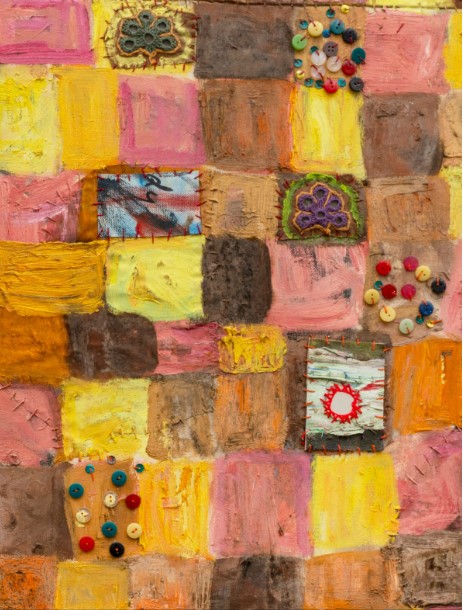
Pacita Abad's 

Wednesday, January 26, 2022

№ 617. La Dolce Far Niente

The idea that “doing nothing” is actually an event in and of itself. The idea that we no longer run on a treadmill of activity from getting the kids ready for school, to brushing our teeth, to conference calls, to picking up kids, fixing dinner, and bed- only to start over again. The idea that our actions day to day become influenced by our instincts and no longer by routines, shoulds, and musts.


Saturday, December 18, 2021

№ 596. Sunday Thoughts


The principal problem is to offer a viable theory as to what truth itself consists in, or, to put it another way, “What is the nature of truth?” To illustrate with an example – the problem is not: Is it true that there is extraterrestrial life? The problem is: What does it mean to say that it is true that there is extraterrestrial life? Astrobiologists study the former problem; philosophers, the latter.

This philosophical problem of truth has been with us for a long time. In the first century AD, Pontius Pilate (John 18:38) asked “What is truth?” but no answer was forthcoming. The problem has been studied more since the turn of the twentieth century than at any other previous time. In the last one hundred or so years, considerable progress has been made in solving the problem.

Monday, April 5, 2021

№ 564. Grief, Resilience and Care


Find free tools to help you navigate grief, cultivate resilience, and care for others from National COVID-19 Day and its partners.

Monday, July 15, 2019

№ 398. Connectedness & Meaning

Patterns on the wall. Connecting the dots. Putting ideas together. Synthesizing.


Apophenia is the tendency to mistakenly perceive connections and meaning between unrelated things. Apophenia has also come to imply a universal human tendency to seek patterns in random information, such as gambling.


Sunday, December 13, 2015

№ 237. Dark Night of the Soul 2

Ramen House intallation

"Many people think that the point in life is to solve their problems and be happy. But happiness is usually a fleeting sensation, and you never get rid of problems. Your purpose in life may be to become more who you are and more engaged with the people and the life around you, to really live your life. That may sound obvious, yet many people spend their time avoiding life. They are afraid to let it flow through them, and so their vitality gets channeled into ambitions, addictions, and preoccupations that don’t give them anything worth having. A dark night may appear, paradoxically, as a way to return to living. It pares life down to its essentials and helps you get a new start.

Tuesday, August 11, 2015

№ 205. Cafeteria at the Edge of the Universe


Pico Iyer, in his book “The Art of Stillness,” recounts his meeting with Cohen at a Zen monastery up on the hills outside Los Angeles. Cohen, without any irony, told Iyer that sitting still was the “real deep entertainment” he had found in his 61 years on the planet. In his book, Iyer declares: “Going nowhere … isn’t about turning your back on the world; it’s about stepping away now and then so that you can see the world more clearly and love it more deeply.”

Saturday, February 8, 2014

№ 160. The Consolation of Grief

Grief is a curious beast.
He's barbed, so you know he can sting.
Also, he's quite reserved and shy.

He comes for visits.
But you have to invite him in.
You have to insist he stays a bit.

Of course, he declines, at first.
He's a little embarrassed by the invitation, 
As is his nature. But he accepts, anyway.

He thinks it's just impolite to ignore a second offer.
So you finally see him seated in your living room.
Quiet. A little out of place on your sofa. But there.

You offer him a brew of black bitterness.
He loves the aroma. It scalds the sinuses
Like the sniffles from a December smog.


Saturday, March 30, 2013

№ 121. Humanity's Search for Meaning

Celebrated Austrian psychiatrist and Holocaust survivor Viktor Frankl, born on March 26, 1905, remains best-known for his indispensable 1946 psychological memoir Man’s Search for Meaning (public library) — a meditation on what the gruesome experience of Auschwitz taught him about the primary purpose of life: the quest for meaning, which sustained those who survived.

For Frankl, meaning came from three possible sources: purposeful work, love, and courage in the face of difficulty.

In examining the “intensification of inner life” that helped prisoners stay alive, he considers the transcendental power of love:

"Love goes very far beyond the physical person of the beloved. It finds its deepest meaning in his spiritual being, his inner self. Whether or not he is actually present, whether or not he is still alive at all, ceases somehow to be of importance."

Frankl illustrates this with a stirring example of how his feelings for his wife — who was eventually killed in the camps — gave him a sense of meaning:

"We were at work in a trench. The dawn was grey around us; grey was the sky above; grey the snow in the pale light of dawn; grey the rags in which my fellow prisoners were clad, and grey their faces. I was again conversing silently with my wife, or perhaps I was struggling to find the reason for my sufferings, my slow dying. In a last violent protest against the hopelessness of imminent death, I sensed my spirit piercing through the enveloping gloom. I felt it transcend that hopeless, meaningless world, and from somewhere I heard a victorious “Yes” in answer to my question of the existence of an ultimate purpose. At that moment a light was lit in a distant farmhouse, which stood on the horizon as if painted there, in the midst of the miserable grey of a dawning morning in Bavaria. “Et lux in tenebris lucet” — and the light shineth in the darkness. For hours I stood hacking at the icy ground. The guard passed by, insulting me, and once again I communed with my beloved. More and more I felt that she was present, that she was with me; I had the feeling that I was able to touch her, able to stretch out my hand and grasp hers. The feeling was very strong: she was there. Then, at that very moment, a bird flew down silently and perched just in front of me, on the heap of soil which I had dug up from the ditch, and looked steadily at me." (Brainpickings)