Showing posts with label popular philosophy. Show all posts

Thursday, October 9, 2025

№ 784. 2 Small Happy Habits

Wilder Thoughts


2 Small ‘Habit Changes’ For A Noticeably Happier Life, By A Psychologist
By Mark Travers,
Contributor. Mark Travers writes about the world of psychology.


A recent study published in the Journal of Macromarketing found that people who practice voluntary simplicity, deliberately consuming less and relying more on their own skills, report higher levels of both happiness and life purpose.

After analyzing a sample of New Zealander consumers, the study found that those who opted for simpler lives reported greater happiness and a stronger sense of purpose. Notice here the usage of the word “simple” instead of “easy” or “convenient.”

This tells us the opposite story from what’s being peddled to us today. Well-being might only take root in a lack of comfort, through the deliberate act of making space for what matters. But here’s the problem: we live in a culture that sells ease as the highest good. Faster shipping, one-click purchases and all such digital shortcuts are serving the same end of smoothening the harsh edges of daily life.

The study, therefore, comes bearing a warning for our AI-powered lives: the more convenient our lives become, the less content many of us actually feel. The good news is, it also comes bearing solutions, suggesting that the route to happiness may lie not in streamlining everything, but in consciously choosing a little inconvenience.

This isn’t about austerity or giving everything up. It’s about deciding that “enough” can feel better than “more.” And when people make that decision, they tend to redirect their time and energy into areas that matter far more deeply: connection, growth and meaning.


Why Does ‘Voluntary Simplicity’ Work?

Researchers categorize happiness in two primary ways. The first is hedonic wellbeing, which is the day-to-day experience of pleasure and satisfaction. And then, there’s eudaimonic wellbeing, which is more about living in alignment with your values, feeling that your life has direction and growing as a person. Hedonic well-being is usually experienced in the short-term, while the latter evolves and, when done right, increases over the long-term.

Interestingly, by embracing voluntary simplicity and stepping away from the clutter of constant consumption, people seem freer to invest in what fuels them on both fronts.

Convenience, as helpful as it can be, also may be robbing us of our agency. When every problem is outsourced or solved instantly, we miss out on the small challenges that give us a sense of competence and creativity.

Experiencing self-sufficiency, whether that means fixing a home electrical issue, cooking for a grieving neighbor or even having a meaningful conversation instead of picking up your phone, can remind you how satisfying effort can actually feel. That satisfaction, research shows, is often what often leads to lasting happiness.

But, there’s a caveat. To find happiness, you don’t need to strip away all forms of convenience. Instead, focus on creating space for what adds to your life, whether that’s your relationships, a sense of purpose or the pride of making something with your own hands.

Here are two small, practical changes that capture this spirit of simplicity in everyday life and can make you significantly happier.

Monday, August 19, 2024

№ 749. Meaning v. Happiness

Meaning


Yet another relatively uncontroversial element of the concept of meaningfulness in respect of individual persons is that it is logically distinct from happiness or rightness (emphasized in Wolf 2010, 2016). First, to ask whether someone’s life is meaningful is not one and the same as asking whether her life is pleasant or she is subjectively well off. A life in an experience machine or virtual reality device would surely be a happy one, but very few take it to be a prima facie candidate for meaningfulness (Nozick 1974: 42–45). Indeed, a number would say that one’s life logically could become meaningful precisely by sacrificing one’s well-being, e.g., by helping others at the expense of one’s self-interest. Second, asking whether a person’s existence over time is meaningful is not identical to considering whether she has been morally upright; there are intuitively ways to enhance meaning that have nothing to do with right action or moral virtue, such as making a scientific discovery or becoming an excellent dancer. Now, one might argue that a life would be meaningless if, or even because, it were unhappy or immoral, but that would be to posit a synthetic, substantive relationship between the concepts, far from indicating that speaking of “meaningfulness” is analytically a matter of connoting ideas regarding happiness or rightness. The question of what (if anything) makes a person’s life meaningful is conceptually distinct from the questions of what makes a life happy or moral, although it could turn out that the best answer to the former question appeals to an answer to one of the latter questions.

№ 748. The Ghost Month, Love & Other Monsters

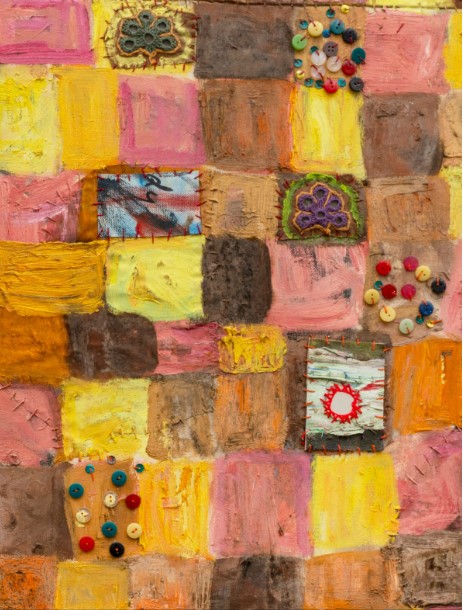
Pacita Abad's 

Sunday, February 11, 2024

№ 715. Goodbye, Things.

7 Powerful Lessons from "Goodbye, Things: The New Japanese Minimalism" by Fumio Sasaki:

1. Happiness Comes from Within, Not Possessions: The book argues that the pursuit of material possessions often leads to stress, anxiety, and a sense of emptiness. True happiness comes from cultivating meaningful relationships, pursuing passions, and living in alignment with your values.

2. Decluttering is a Liberating Experience: Letting go of excess belongings can be a deeply liberating experience. It can free up your physical space, mental energy, and emotional baggage. This allows you to focus on what truly matters and live a lighter, more fulfilling life.

3. Less is More: Sasaki advocates for a minimalist approach to life, suggesting that having less paradoxically leads to more. With fewer possessions, you have more time, energy, and freedom to pursue your passions and experience life to the fullest.

4. Curate Your Space, Reflect Your Values: The book encourages you to surround yourself with only objects that bring you joy, utility, or beauty. This creates a space that reflects your values and priorities, fostering a sense of peace and well-being.

5. Gratitude for What You Have: By focusing on the things you own and appreciate, rather than what you lack, you cultivate a sense of gratitude and contentment. This shift in perspective leads to a more positive and fulfilling life.

6. Quality over Quantity: The book encourages prioritizing quality over quantity when acquiring possessions. Invest in fewer, well-made items that you truly cherish and use regularly, rather than accumulating cheap, disposable goods.

7. Minimalism is a Journey, Not a Destination: Sasaki emphasizes that minimalism is not about achieving a perfect state of emptiness. It's a continuous process of decluttering, evaluating, and refining your relationship with your possessions. The goal is to live with intention and purpose, focusing on what truly matters to you.

Letting go of things can be challenging, but the rewards are significant. By embracing minimalism, you can create a life that is more intentional, fulfilling, and free from the burdens of material possessions.

Tuesday, May 31, 2022

№ 634. Robert Fulghum

Searching for Laugh

Fulghum, a voracious reader, is the first to admit that ''Kindergarten'' is not great literature. Some of it, he freely admits, is the ''worst kind of heart-rending daddy drivel imaginable,'' the literary equivalent of happy-face buttons - cheery conversational revelries on such diverse subjects as hide-and-seek, spider webs, Crayola crayons, Beethoven's Ninth Symphony, Ty Cobb's batting average. Not without charm, the essays seem to appeal to the same instinct that makes the proprietor of a 24-hour grille in Moab decorate the walls of her restaurant with perky sayings like ''Square meals make round people'' and ''Is there life before coffee?''

Rabbi Harold S. Kushner, whose own book of reflective essays, ''When Bad Things Happen to Good People,'' was also a phenomenal best seller, believes that Fulghum's popularity can be explained thus: ''In a world of complex ethical decisions, he cuts through the details and says 'at the heart are a few simple rules. You can be a moral person; it's not as complicated as it seems.' ''

FULGHUM'S ESSAYS REAFFIRM THE SANCTITY OF THE ordinary. He does not preach, and rarely mentions God, but his book has a strong spiritual component. He focuses on the transcendental stuff of everyday life - shoe repair men, raking leaves and emptying the sink strainer. Not quite preacher, not quite regional humorist, he is a hybrid folk fabulist - a sort of Norman Vincent Bombeck.


The Ohio State University


OUTSIDE THE Edmonds Unitarian Church, in Seattle, where Fulghum served as part-time minister from 1966 until 1985, is a stretch of lawn littered with hundreds of dandelions. The congregation dedicated this patch of ground in Fulghum's honor upon his retirement in 1985, at 48. ''I was speechless beyond belief,'' he said one afternoon at the church. ''It said they heard me. I take this ground very seriously.''

More than anything else, it is Robert Fulghum's years as a minister and teacher that give his stories resonance. ''Being human and alive is a pretty lonely deal,'' he said, ''no matter how intimate or lovely your relationships are.''

His perspectives on the commonality of human experience have been gleaned from hundreds of weddings, funerals, hospital rooms and mortuaries. All that birth, death, and renewal makes for prime storytelling fodder. Distributing someone's remains from 2,000 feet over Bellingham Bay, Wash., in a Cessna, Fulghum had the ashes fly back in his face. ''How do you brush off those ashes?'' he asks with mock seriousness. ''Do you go like this?'' (polite dusting gestures) ''Or like this?'' (frantic pawing).


Cartoonist Group